
Felze
Cabins on gondolas, and, of course, romance novels

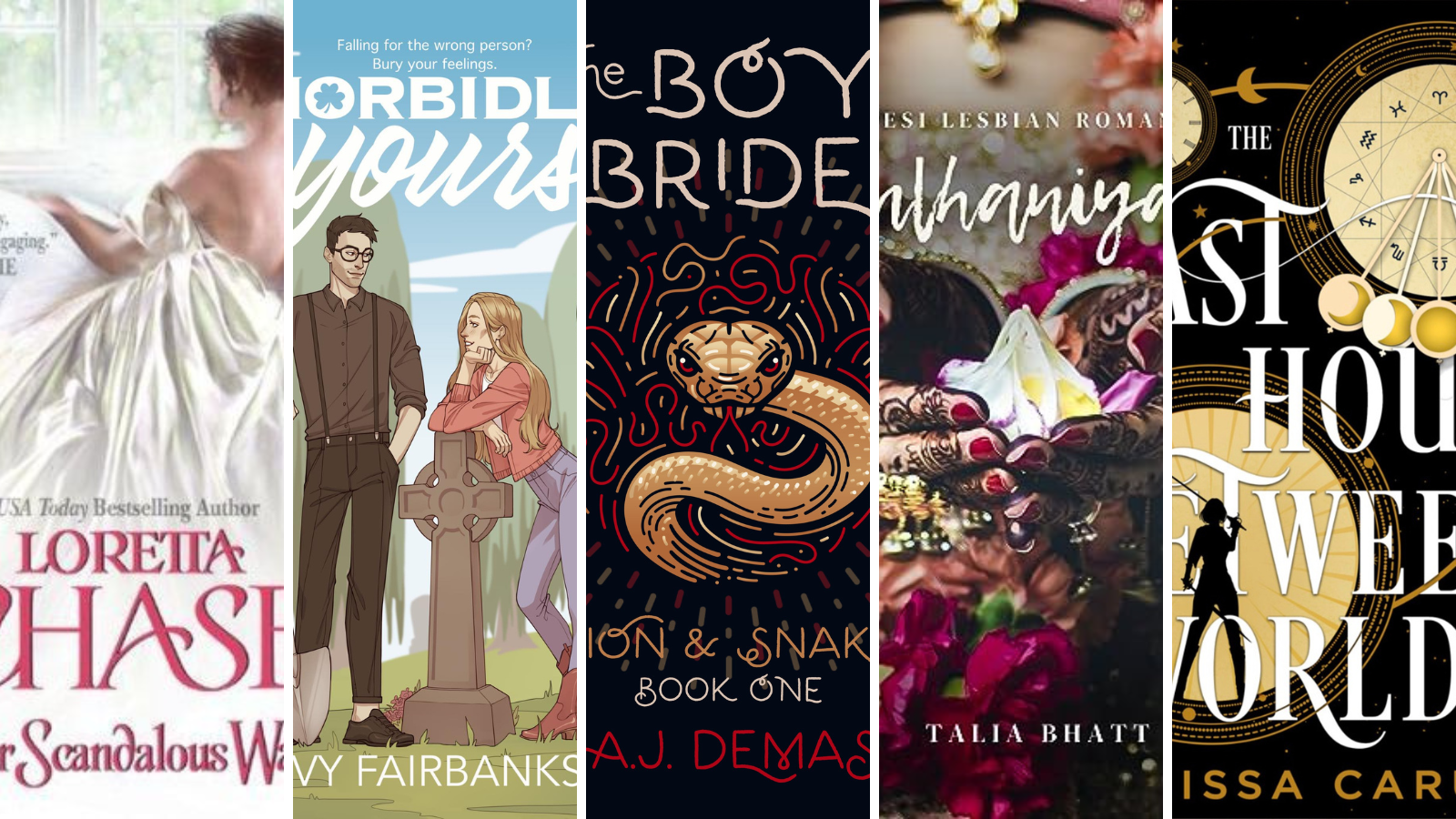
FELZE, n. This is a Venetian word for a little cabin in a gondola. These days most gondolas don’t have them, but prior to the 20th century, fancy residents of Venice often had a little private enclosure on their boats so they didn’t have to endure the rain or the public. Wikipedia notes:
Its windows could be closed with louvered shutters—the original "Venetian blinds".
This is very useful if you are, say, a romance novel character about to do something sexy. Naturally, I learned this word from a historical romance, the Loretta Chase reviewed below.
Here's what I've read lately in small-r romance:
Your Scandalous Ways (m/f, both cis and het, historical) by Loretta Chase. She’s an infamous divorcée and a famous courtesan; he’s a spy who, in his first scene in the book, sleeps with the wicked female villain so he can steal her emeralds. It’s 1820 in Venice. They eye each other at the opera, flirt at cafés, quote Lord Byron at each other, get filthy in the felze of a gondola, sneak into the Campanile di San Marco at night and do absolute romance. There’s intrigue, there’s glamour, there’s banter, her sex work is treated respectfully, it’s glorious. I have read a lot of Loretta Chase novels this summer, and this one is my favorite. Paperback purchased from Thriftbooks; audiobook purchased from Audible, which was the only place I could find it. Kate Reading, the narrator, is wonderful and does a great job reciting Byron and pronouncing the many Romance languages in this book.
Morbidly Yours (demisexual m/allosexual het f, both cis, contemporary) by Ivy Fairbanks. Lark is a Texan who runs away to Ireland following the traumatic death of her husband. She doesn’t intend to tell anyone she’s a widow; she’ll just avoid the topic and all mentions of death. Unfortunately for her, she moves into an apartment across the street from a funeral home, run by a tall, silent, babely Irish loner named Callum. He’s shy and has a stutter, so talking to new people is a challenge for him, and he’s especially stressed out because his beloved late grandfather burdened him with that classic romance problem, My Will Says You Have to Get Married to Inherit. Callum loves taking care of grieving people and doesn’t want the funeral home to go to his no-good father, who abandoned him in his childhood to run off to Scotland, and who would sell the family business to a big corporation. The deadline to marry someone is fast approaching, and Callum doesn’t have any prospects. Dating is especially hard because he’s demisexual and doesn’t experience sexual attraction unless he feels an emotional connection. He slowly comes to like chatty, cheerful Lark, his new neighbor, and she throws herself into solving his problem, signing him up for an app called DemiDate and helping him find matches—all of whom are comically terrible. Though I must confess to being a little bit of a cranky pedant about certain details, this was charming, silly, and sexy, and I loved all the details of Lark’s work as an animator. (As an astute member of my library’s Queer Romance Book Club pointed out, her work is the opposite of his: she brings things to life.) Library loan.
The Boy Bride (gay cis m/nonbinary character attracted to men, fantasy) by AJ Demas. Lill is sent to the mountain fortress of Umtúshta with a public mission of becoming the defeated, imprisoned warlord Vanu’s boy bride—and a private mission of becoming Vanu’s killer. Trained as an assassin from childhood in a secret, brutal school, Lill has never known care or friendship, so he’s bewildered when the handful of people living in Umtúshta are mostly nice to him. Sure, they’re strange, and some of them have schemes, but they’re mainly focused on gardening and milking their goats. Also, they don’t seem nearly as walled in as Lill was led to believe, but nobody will tell him where the exit is. I loved that this book had so many disabled characters, particularly characters who communicate in sign language, whether because they once took an arrow to the throat or because they’re deaf or hard of hearing. AJ Demas always does a great job with her fantasy languages. Caveat lector: this is book one of three, so the romance doesn’t conclude happily just yet, but book two comes out this month. Indie published; purchased directly from the author.
Dulhaniyaa (cis f/trans f, both lesbian, contemporary) by Talia Bhatt. If you happened to take four semesters of Hindi twenty years ago, it’s a real treat to read the dialogue in this book. If you aren’t in that very niche audience, this book is still a treat. (And you will be fine, linguistically.) Esha returns home to Mumbai to please her mother by getting married, though what she really wants to do is go to art school. The only aspect of her wedding that interests her is her choreography teacher, Billu, a stunning woman who dances beautifully and translates the lyrics of old love songs for her. Over the course of many private dance lessons, visits to street food vendors, and motorcycle rides through neighborhoods of Mumbai, Esha and Billu fall in love. But they can’t be together because Esha is getting married to a man her mother has chosen, and Billu, as a trans woman, feels she can’t ever have the marriage she wants in India. This comes to a climax with a wild, comic, terrifying chase through Mumbai’s parking garages, highways, and construction sites, and it ends with airport reunion scene in classic romance fashion. I had a great time. Indie published; ebook from Kobo Plus.
And one last note about a book that is romance-adjacent fantasy: The Last Hour Between Worlds (demi bi cis f/? f) by Melissa Caruso. I saw Caruso in conversation with Alix E. Harrow in November and she was fantastic. I wasn’t able to buy a copy at that event, but a few months later, when Tropes & Trifles in Minneapolis was caring for protesters, I ordered a copy to support the store. My to-be-read pile is out of control, but I finally arrived at this gem of a book, and I am here to spread the good news. Also, for my people who like to read a book in multiple formats simultaneously, the audiobook is narrated by Moira Quirk, who is superb. Your library might have it; mine did.
Last Hour a miracle of plotting, has great characters, and is about two women refusing to talk about their feelings while they attend the same New Year’s Eve party that is falling through layers of reality and people keep getting murdered and maybe the apocalypse is about to happen. I mean, it’s more about the two women saving the day with swords and cleverness, but you know how I am: I love when women characters specifically are bad at romance. In the real world and in fiction, we often expect women to be great at understanding and expressing emotion, which, sure, fine, this is a skill lots of women have, whatever. But also: let her be a lil obtuse! For feminism and for me personally to enjoy. Stubborn, repressed, accidentally or on purpose kind of a jerk, I love to see it.
That’s not to say that either Kembral Thorne or Rika Nonesuch (I am obsessed with these character names) is a jerk. They’re real people with troubled lives and difficult jobs who haven’t had all their edges sanded off. Kembral, in particular, has my defense for any dickish comments she makes, because she’s an exhausted nursing mother with a two-month-old baby at home and this party is her one brief excursion back into normal adult life. She doesn’t expect the party to continually restart itself, every time loop one layer (“echo”) deeper, farther from reality and closer to nightmares, but it does and she’s the only one who notices—at first. Time in reality remains frozen, so her baby is safe (huge sigh of relief!), but she still has to get herself and all these partygoers out of the hellish time loop, and meanwhile her milk is about to let down. This is such an incredible conceit: early parenthood already feels like a time loop, a bleary, exhausted, didn’t-we-already-do-this, cyclical, unreal state of being, where every repetition is somehow harder and worse than the last, but you keep going because you have to. And because you’re falling in love—with your baby, as a parent, but also, if you’re lucky and you’re Kembral Thorne, romantically, with your hot, sneaky, deadly nemesis, Rika Nonesuch.
And, less fortunately, instead of endlessly nursing and changing diapers, you’re fighting monsters with swords.
As a reader, however, that part was great. Also, every time the party restarts, the theme is different, so all the decor and costumes are new. If you love a party scene, this book will invite you to nearly a dozen. I was enthralled.
That's all for this time! I will be back in your inbox on September 27.
Word Suitcase is a free newsletter about words and books. If you enjoyed this one, subscribe by email or RSS for the next one. If you know somebody who'd like reading these, please pass it along!
Websites do cost money, so there is a paid subscription option and a tip jar for one-time donations. If you feel moved to support me, I’m very grateful. But please don’t feel obligated. I love having you as a reader either way.