
200
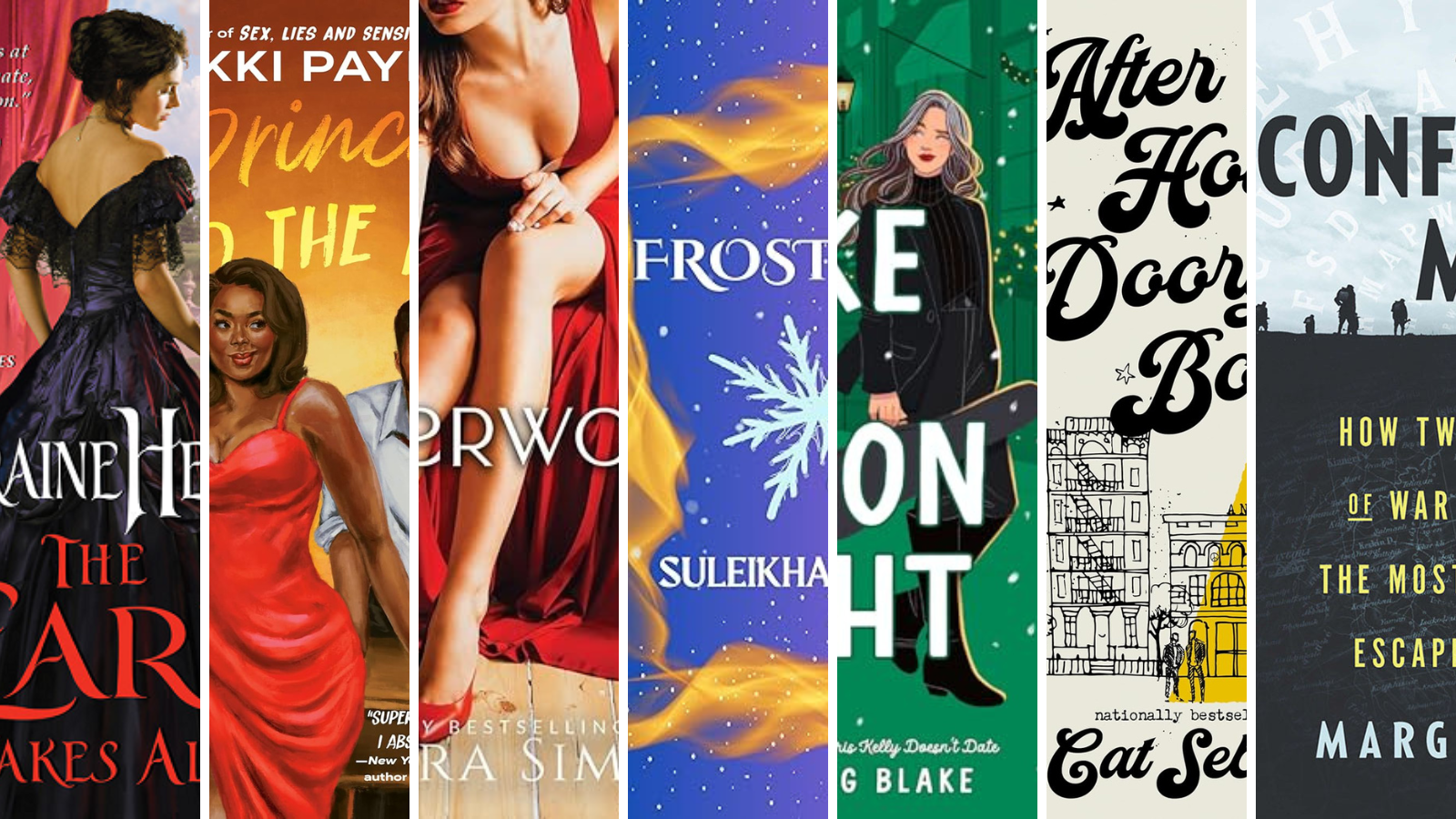
a few of the previous 200 (!) issues of Word Suitcase, and, as always, romance novels

Happy Solstice, Word Suitcase readers, whatever hemisphere you’re in!
My kid’s not in school so I haven’t written a new newsletter this time, but since this is the 200th Word Suitcase (!), I thought I’d offer a sampling of the previous 199 newsletters, one per calendar year:
- Dead Dove Do Not Eat, 21 July 2019, on “legerdemain,” sleight of hand, Les Mis, and tricks in fiction
- Window undressing, 29 November 2020, on “window dressing” and the role of decor in romance novels, with examples from Ruby Lang, Iona Datt Sharma, Holley Trent, and others
- Furbelows and dandies, 21 February 2021, on “furbelow,” fashion, dandyism, gender, Jules Barbey d’Aurevilly, and Socrates dragging Alcibiades out of bed
- Legally obscene, 4 December 2022, on “cunt” and a moment from Freya Marske’s A Restless Truth
- a word to the poem, 15 October 2023, on “leopard,” a poem by Jorge Luis Borges, suffering, art, miracles, and Sierra Simone’s Salt Kiss and Mia Tsai’s Bitter Medicine
- Every beating heart a secret, 4 February 2024, on “sonder,” glimpses of the inner lives of strangers, Charles Dickens, Talia Hibbert, and Kate Clayborn
- Pudding eater blues, 27 July 2025, on “pudding” and a moment from Sherry Thomas’s Delicious
I've read quite a lot of small-r romance lately!
The Earl Takes All (m/f, both cis and het, historical) by Lorraine Heath. I waited a while to try Lorraine Heath because a lot of her books have pregnancy (and the specter of loss or complications) in them, and for years that wasn’t a thing I could read about, but I’m doing okay now and more importantly, a certain corner of the romance internet refers to this novel as “gorilla twins,” and I simply had to know what that was about. Twin British aristocrats go on safari to Africa, have an unfortunate encounter with a gorilla, and only one comes back. Luckily it’s the earl whose pregnant wife was eagerly awaiting his return, and not the earl’s ne’er-do-well younger brother! That younger brother definitely wouldn’t be fulfilling the earl’s dying wish that he not tell said pregnant wife any shocking bad news that might make her lose the baby. He for sure wouldn’t impersonate his older brother and then accidentally fall in love with his brother’s wife. That would be nuts. Also, the wife would hate him when she found out. High-octane angst fuel, but also: gorilla. I love a wild premise taken to its even wilder conclusion, and this was a good time with only a few “ugh” moments, like when the earl physically threatens one of his tenants and the countess thinks it’s sexy. Yuck. Look, I read a lot of historical romance set in nineteenth-century England, I know they’re all landlords, there’s a lot of evil underlying the whole system that props them up, but like, give me the fig leaf that he’s “one of the good ones”! If I can believe in the gorilla twins premise, I can stretch my imagination to accommodate a landlord who deals fairly with his tenants. Library ebook.
The Princess and the P.I. (m/f, both cis and het, contemporary, suspense) by Nikki Payne. Fiona Addai was raised in a fundamentalist Christian cult where she won the Miss Obedience pageant three years in a row. She’s a twenty-eight-year-old virgin with very little direct experience of the world, and yet the book opens with her attempt at grand larceny—stealing back her late brother’s stolen invention in the middle of a tech convention. It goes extremely poorly and ends with Fiona in jail as a suspect, not just for larceny, but for murder as well. Private investigator Maurice Bennett bails her out; he’s been trying to find a way to learn more about her family’s cult, which he’s sure covered up a murder years before. Fiona agrees to help him with that case if he’ll teach her about being a P.I., which is her dream job. Naturally they end up spending a lot of time together, sometimes undercover, sometimes in peril, and it’s fun as hell. The mystery is twisty and the sex is hot, and I loved that the reference to “the princess and the pea” is actually about Maurice, who’s so sensitive to injustice that he can’t ever let it go. Maurice is also a quilter, which is a hobby I’ve never seen a romance hero do, so while he’s piecing together the case he’s also literally piecing together quilts. He learned the skill from his grandmother, and it’s so cool to see this Black American art form celebrated in this book. This was such a great read and I will definitely pick up more Nikki Payne books in the future. Library loan.
Sherwood (m/f/f, all cis and all bi I think?, contemporary, erotic) by Sierra Simone. This is a kinky queer Robin Hood retelling, connected to Simone’s Lyonesse trilogy (previously discussed) and available for free on her site. It packs quite a lot of betrayals, twists, and kink into not very many words, and is, as always with Sierra Simone, hot. Sometimes I have questions about how the US military and intelligence agencies are portrayed in this series, but I can set a lot of things aside for “Robin Hood is a girl,” and not just any girl, but a bisexual butch hacker. Indie published, free download.
Frostburn (m/m/f, all cis and bi, fantasy, novella) by Suleikha Snyder. I had the pleasure of reading this prior to publication and it is such a treat. Dhayana is queen of Sachai, but with her husband missing and presumed dead, her position is precarious. If she lives long enough, her pregnancy will become obvious, but there’s a real possibility that she won’t. Her hostile court is scheming against her—with the exception of her two loyal bodyguards, one who can wield the power of fire and the other who wields ice. In addition to their vow to protect her, they’re also both secretly in love with her. It’s always been impossible to act on that feeling, but at least they have each other. This novella shows the tipping point where things change for all three of them. The characterization is great, and there’s an impressive amount of worldbuilding sketched out through the use of diary excerpts and glimpses of other points of view. It’s a gorgeously written novella, lush and tense and sexy. Advance copy/indie published, ebook bought from Kobo.
Make the Season Bright (f/f, both cis and bi, contemporary) by Ashley Herring Blake. I am not into romcoms or Christmas books, but I am into my local library having a successful queer romance book club, so I read this. While I struggled with both the Christmas and the romcom aspects of it, being a person who hates fun and has no joy in my heart etc etc, I will say that the romance did eventually win me over. It’s a second-chance romance, since Brighton left Charlotte at the altar five years ago, so as you can see, the technical difficulty score of this book is high. I was Team Charlotte for a lot of the book, even though I don’t normally read that way—siding with one character over another—but since Charlotte eventually forgives Brighton, so did I. However, I will be holding a grudge against this book for its “joke” that “gays and math don’t mix,” because (1) don’t disrespect Alan Turing like that, and (2) these characters are professional classical musicians, so I refuse to believe they are scared of numbers, and (3) most importantly, it is not funny. When I complained about this bigoted cliché masquerading as humor to my partner, he said, “‘Gay people can’t do math’ feels Larry-Summers-coded” and he’s right. If your queer romance fiction contains a “joke” that disgraced misogynist Epstein-files creep Larry Summers might make, you should have to stand in the corner and think about what you did. Sorry to be such a buzzkill about this; I did finish and mostly enjoy the book. I am a simple creature and I like to read about two women having hot sex. Here’s what we’re aiming for in 2026: fewer unfunny regurgitations of bigotry (zero, ideally), more women grinding on each other. Library loan.
After Hours at Dooryard Books (m/m, both cis and gay, historical) by Cat Sebastian. This book was perfect and made me embarrassed that I’ve never read any Walt Whitman, so I promise to fix that soon.* In my defense, I am a high school dropout, which I think set me on the path of never knowing anything about any English-language literature—though Patrick, one of the main characters of this book, is also a high school dropout, and he ended up working in a secondhand bookstore as the world’s number one Whitman stan, so I don’t have any excuse, really. But I’m ahead of myself: it’s 1968 in Manhattan. The US is embroiled in a horrific war in Vietnam and riven with domestic political strife, and things seem really, really bad in a way that’s all too familiar. Patrick works at Dooryard Books, where his boss Mrs. Kaplan often brings in people in need of help—food, money, shelter, work, anything—and where once, long ago, she helped him. The book opens with Mrs. Kaplan bringing in a man named Nathaniel, who is quiet and underfed but doesn’t seem quite like the troubled teens and unhoused veterans that Mrs. Kaplan usually helps. Nathaniel won’t say anything about his past or what happened to him, but he turns out to be both severely agoraphobic and extremely helpful when Patrick’s sister-in-law Susan shows up in the middle of the night with her newborn. Susan’s husband was just killed in Vietnam, and she’s a mess. Patrick, Nathaniel, and Susan have to take on caring for the baby and running the bookstore together, and it’s just beautifully written and captivating. It’s political and hopeful and so good it made me cast aside everything else I was doing. There’s so much love for messy, struggling, vibrant NYC here, and everyone who lives there, and for the books that save your life. I don’t really do content notes in this newsletter any longer, but this is a book about grief, including the past loss of a child, handled delicately but present nonetheless. Indie published, book bought from Kobo.
*After I wrote this review, I was in a secondhand bookstore with my kid, and the poetry section was right next to the picture-books-about-trucks section, so I own Leaves of Grass now.
In things that are neither Romance nor romance, as novel research and also just for pure “this is nuts, you gotta hear this” fun*, I read Margalit Fox’s The Confidence Men, a nonfiction account of a Welsh guy and an Australian guy, both officers of the British Empire fighting in WWI who were captured and held as prisoners in Ottoman Turkey, and their bonkers escape from prison in which they convinced everyone they were spiritualists and telepaths. Both men later wrote memoirs about this, but Margalit Fox is able to contextualize their feat within the history of spiritualism, cons, cults, stage magic, and psychology, and I love her writing. She’s also able to note where they demonstrate prejudices regarding Turks and Jews, which I appreciated. Initially I had this as a library audiobook, but while the audiobook narrator, who is Welsh, does a wonderful job with the Welsh guy, Jones, and the bits of actual Welsh language in the text—at least to my ignorant ear—he’s less able to handle the Australian guy, Hill. I watch enough Bluey to know. Also, his decision to give the Jewish man in this story the absolute most servile and sniveling voice is… well, I would’ve perhaps read Fox’s footnotes about how unfortunately antisemitic the firsthand sources are, and then made a different choice. (The narrator’s American accents also sort of fall into the uncanny valley of close-but-not-quite-right, but honestly I feel we deserve that, as a nation.) Anyway, one more good reason to read this with your eyes if you have that ability is that there are charts, photos, and illustrations that enrich the text. It’s a wild ride. People suffer so much and are staggeringly awful to each other—the WWI of it all—but are also incomprehensibly brilliant. Ebook bought from Kobo.
*RE: "fun," it is an unfortunate true fact about me that I would rather read nonfiction about WWI than a Christmas romcom. God, this newsletter is way too revealing.
Wishing you all the best possible last few days of 2025! I'll be back in your inbox on January 4, 2026.
Word Suitcase is a free newsletter about words and books. If you enjoyed this one, subscribe by email or RSS for the next one. If you know somebody who'd like reading these, please pass it along!
Websites do cost money, so there is a paid subscription option and a tip jar for one-time donations. If you feel moved to support me, I’m very grateful. But please don’t feel obligated. I love having you as a reader either way.