
I take all my reading seriously
on Zen Cho's novella The Perilous Life of Jade Yeo

GUDGEON, n. A gudgeon is a small European freshwater fish, also called a “goby,” a word I just learned from this beautiful Ukrainian cookbook I checked out of the library. “Goby” comes from Latin “gobius,” whereas “gudgeon” comes from French “goujon,” which… also comes from Latin “gobius.” When the same root word produces two different modern words, we call them doublets. So “gudgeon” is a doublet of “goby.”
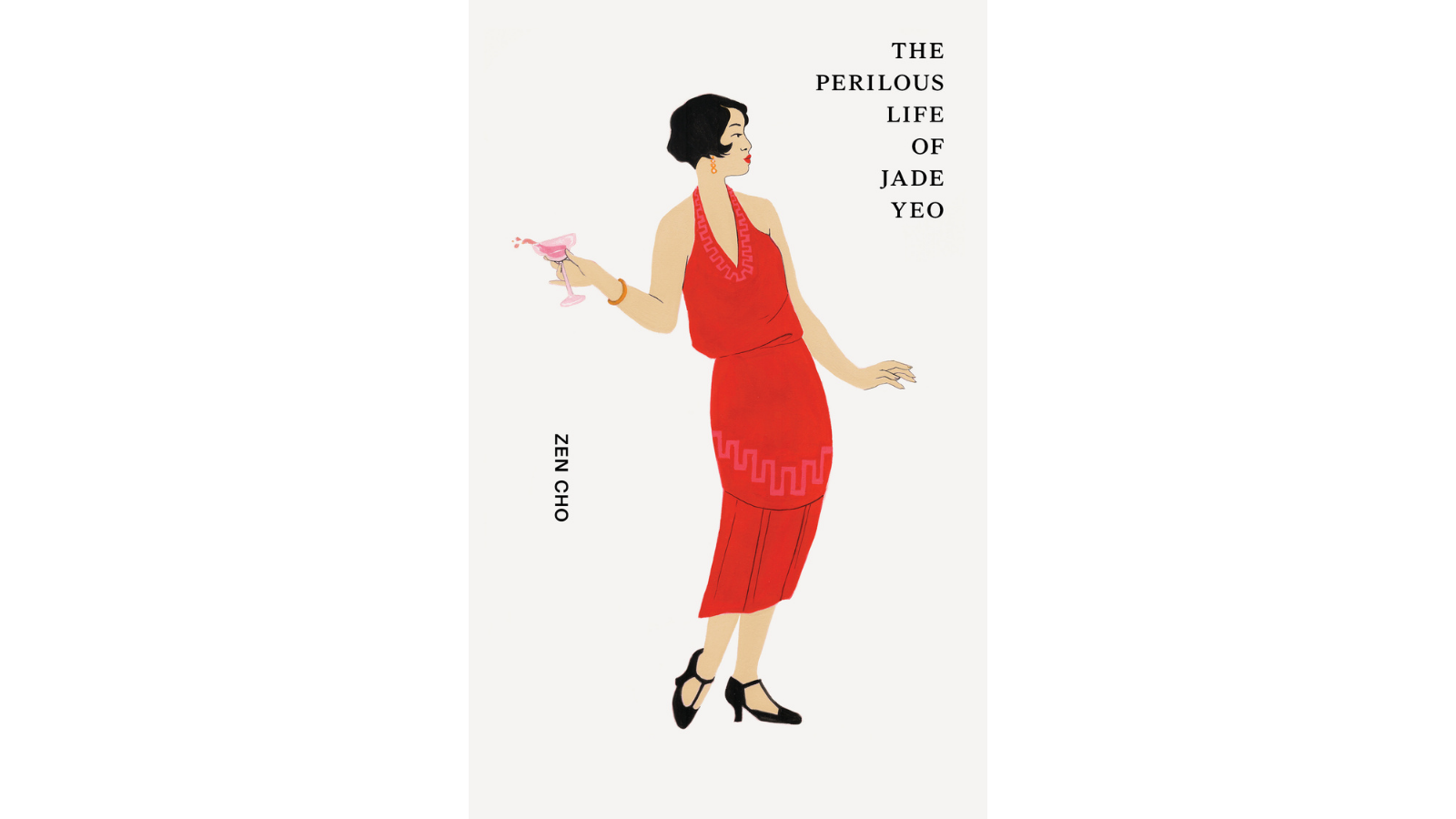
“Gudgeon” acquired a second meaning later in life: “a gullible person, one who will ‘swallow’ anything, thus gudgeon-fishing, the ensnaring of suckers,” per Green’s Dictionary of Slang. I came across this usage—gudgeon as fool—in Zen Cho’s marvelous romance novella The Perilous Life of Jade Yeo, which is forthcoming from Homeward Books, with a perfect cover illustration, on June 17. They offered me a review copy, and, not being a gudgeon, I said yes please.
The Perilous Life of Jade Yeo (m/f, both cis and het, historical) is set in 1920s London and told through the diary of its eponymous narrator, a young woman who has come to London from Malaysia and is making a living as a contributor to her friend Ravi’s magazine, the Oriental Literary Review. She writes a scathing critique of a famous novelist’s latest publication. The novelist, Sebastian Hardie, is unexpectedly tickled, and he invites Jade to attend one of his fancy literary parties, where she feels out of place:
I skulked in a corner clutching it and trying as hard as I could to look inscrutable and aloof, but feeling scrutable and loof as anything.
Jade loves words and dictionaries, so naturally I love her. It’s my duty as the author of this newsletter to say that “inscrutable” is from French, related to “scruter,” to examine closely. “Aloof” is a sailing word, meaning “to the windward side,” related to “luff,” the windward side of a sail. If you keep your ship aloof, you keep it far from the shore. This nautical usage eventually expanded to a more general one about being far away from something—not necessarily physically far. Jade is wishing for emotional distance from the party, and to remain unreadable, but she doesn’t feel she’s succeeding. There, now I’ve thoroughly ruined her joke.
Jade isn’t just witty with words. She’s also a reader—a historical romance reader, at that. When Hardie tells her that “a really serious reader is a treasure for any author,” she writes:
I thought of the novelette on my bedside table. It's sitting on top of Dream of Red Chamber, which I have been meaning to read for ages, only I've misplaced my Chinese dictionary somewhere, so I have been reading other things while waiting for the dictionary to turn up.
Right now, my substitute book is The Duke’s Folly. The Duke is searching for the naïve yet spirited young governess who has helped him throw off his malaise (dukes are always in terrible danger of lapsing into a malaise; it must be all that fox-hunting and quail). But the heroine has gone to the country and is living with her amusing but embarrassingly middle-class sister. I can't imagine the sort of face Hardie would make if he came upon The Duke's Folly on his bedside table, but I love reading it. It's like sinking into a warm bath, or eating a bowl of congee with thousand-year eggs.
“I take all my reading seriously,” I said.
I take all my reading seriously. Hear, hear.
“Novelette” is doing something fun in that description. It actually refers to the book’s length—shorter than a novella—but the -ette suffix can connote femininity, too. Jade’s reading is small, light, feminine, unserious. It’s not a great work of literature like Dream of Red Chamber; she certainly doesn’t need a dictionary to read it. And that’s before we get to “amusing but embarrassingly middle class,” which is the kind of judgment that Hardie might render of The Duke’s Folly itself.
Jade’s intuition that Hardie would make a face if he encountered The Duke’s Folly is correct, so savvy readers will note this irredeemable character flaw; he cannot possibly the hero. He does, however, have one thing going for him:
He was so good-looking! It is dreadful when people are good-looking and pay attention to you. It rarely happens to me, so I didn’t know what to do with myself.
Hardie is married, but he and his wife have a very modern, open arrangement, and he invited Jade to his party, and asked her about her reading, because he intends to seduce her. Here I am pausing again because this book has so much wordplay and love for dictionaries, it’s simply too fun to quote:
Of course, I didn't go to see Hardie with the idea of debauching—or being debauched, I suppose, since I imagine any bauch he ever had has long been removed. (Certainly his letter gives this impression. I had to look up most of the words.)
Jade, out of a sense of adventure, does eventually accept his advances, and once her curiosity is satisfied, she wants to move on. Hardie doesn’t, however, so their relationship becomes awkward even before she discovers her pregnancy (this is a spoiler, but it’s also the sort of thing I believe in spoiling). Further awkwardness arises when Jade goes to visit Hardie and his wife, Diana, to announce her pregnancy, and Diana apologetically informs her that she has missed the beginning of tea. Then we get this sharp, funny, memorable moment:
“That's all right,” I said. “Tea is a made-up meal to me anyway.”
“Do you not have tea in China?” said Diana.
The British are a peculiar race. My grandfather was transported to Malaya because they needed tin, and yet I've never once met a Briton to whom the thought had occurred that perhaps I spoke English because I am from one of their colonies. It is as if I were a piece of chess in a game played by people who never looked down at their fingers.
“We have the beverage, but not the buns,” I said, to avoid tiresome explanation.
A piece of chess in a game played by people who never looked down at their fingers. What a succinct way to describe it. Jade’s family has felt the force of the British Empire, and then when she goes to London, she meets people like Diana, who benefit from it and yet have never thought about it at all.
I’ve made it a thousand words into this essay and said nothing of the romance, but trust me, there is one. It’s beautifully affecting, and I think you can see its shape in what I’ve written above: Jade could only love someone who wouldn’t grimace at seeing her read The Duke’s Folly. She’d need someone with an intelligence to rival hers, someone who wouldn’t say ignorant things like “Do you not have tea in China?” A bit like her dictionary, she’s misplaced him, but he turns up when she needs him the most.
That's all for this time! I will be back in your inbox on April 26th.
Word Suitcase is a free newsletter about words and books. If you enjoyed this one, subscribe by email or RSS for the next one. If you know somebody who'd like reading these, please pass it along!
Websites do cost money, so there is a paid subscription option and a tip jar for one-time donations. If you feel moved to support me, I’m very grateful. But please don’t feel obligated. I love having you as a reader either way.